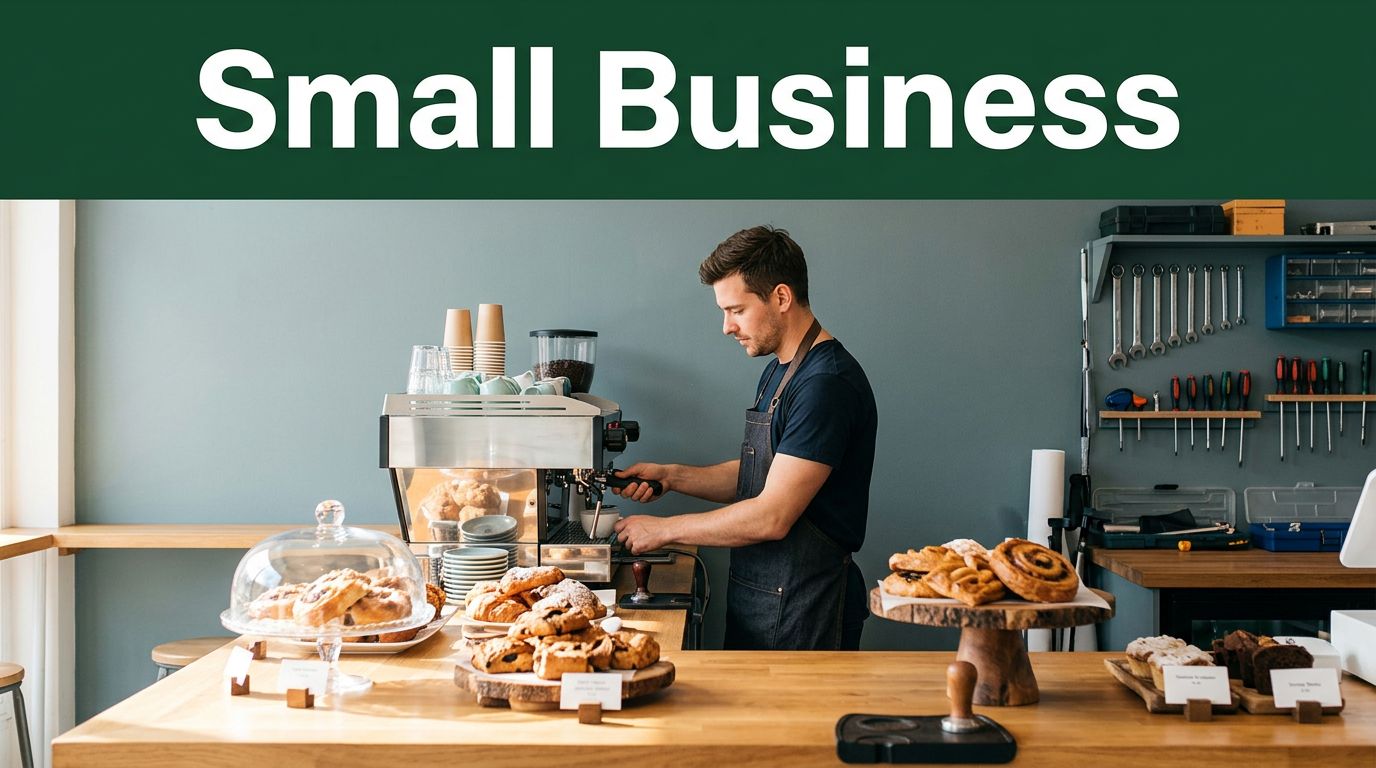
Picture your corner coffee shop buzzing each morning. Or think about the mechanic down the street fixing cars for neighbors. These spots power daily life. Small businesses employ 62.3 million Americans. That’s 45.9 percent of the private workforce. They also drive 43.5 percent of GDP.
You might wonder if your idea fits this group. Or how these operations run day to day. This guide covers the SBA definition, common types, startup steps, daily tasks, funding paths, and economic punch. Based on 2026 SBA rules, you’ll see exactly what counts as small and how it thrives.
The SBA’s Clear Rules: What Qualifies as a Small Business in 2026
The U.S. Small Business Administration sets the bar. An independent business qualifies if it stays under industry-specific limits. These cover average employees over 24 months or annual receipts averaged over five fiscal years. Receipts mean total income plus cost of goods sold from tax returns. Affiliates count too.
SBA reviews standards every five years. No major 2026 shifts happened yet. Proposed revenue bumps for 263 industries sit pending. These rules unlock loans and federal contracts. Stay under them to grab those perks.
For exact checks, see SBA’s official table of size standards.
Breaking Down Employee Counts and Revenue Thresholds
Employee counts include full-time, part-time, and temps. Average them over the past 24 months. Or use 12 pay periods for some cases.
Receipts average the last five fiscal years. New businesses prorate based on time in operation. A shop pulling $6 million yearly might qualify. But add affiliates, and it could tip over.
Take manufacturing. Most limits hit 500 employees. Your factory with 450 workers fits. Retail often caps at $19 million to $32 million in receipts. Simple math keeps it clear.
How Size Standards Differ by Industry
Limits vary by NAICS code. Manufacturing leans on headcount. Services and retail use revenue. This setup tailors help to each sector.
Here’s a quick view of common thresholds:
| Industry | Measure | Threshold Example |
|---|---|---|
| Manufacturing | Employees | 500-1,500 avg. over 24 months |
| Retail | Revenue | $19M-$32M avg. over 5 years |
| Construction | Revenue | $19M-$47M avg. over 5 years |
| Professional Services | Revenue | $25.5M avg. over 5 years |
These examples show the range. Construction firms often hit $39.5 million max. Health care goes up to $38.5 million in spots. Agriculture stays low at $750,000. Check your NAICS for precision. Variation ensures fair play across fields.
Spotting Them Everywhere: Common Types of Small Businesses
Small businesses pop up in every neighborhood. Retail shops like boutiques top $7.5 million in sales and still qualify. Coffee stands or family bakeries fit food services under 500 employees.
Construction crews build homes with receipts under $36.5 million. Professional consultants offer advice up to $20.5 million revenue. Manufacturers churn products with 1,500 workers max.
Home-based setups shine too. Freelance writers or online stores run solo. Picture a graphic designer in her garage landing clients via email. Or an Etsy seller shipping handmade goods nationwide. Services lead growth these days. Tech tweaks and e-commerce boost them amid labor crunches.
Variety lets anyone match their skills. That local gym? Small under revenue caps. Your neighbor’s cleaning service? Same deal. They blend into daily routines yet stand strong.
Your Roadmap to Launch: Steps to Start a Small Business
Starting feels big, but break it down. First, pick an idea. Research demand in your area. Talk to potential customers. See if folks need dog walking or custom cakes.
Next, write a business plan. Outline goals, budget, and sales forecasts. It guides you and woos lenders.
Then, register legally. Choose LLC for protection. Grab licenses and EIN from IRS. Pick a location. Rent space or start home-based.
Secure funding early. Save personal cash or bootstrap small. Finally, hire basics if needed. Market on social media. Launch with a soft open.
SBA offers free tools. Follow their 10 steps to start for details. Grit turns plans into reality. Anyone can do it step by step.
Daily Reality Check: How Small Businesses Operate and Get Managed
Owners juggle it all. Mornings mean checking inventory. Afternoons handle sales and customer chats. Evenings track bills via apps like QuickBooks.
Profits get watched weekly. Prices adjust based on costs. Social posts draw crowds. As teams grow, owners delegate tasks.
Busy rushes test systems. A cafe owner brews coffee, rings up orders, and restocks mugs. Simple tools keep chaos at bay.
Handling the Core Daily Operations
Sales drive everything. Sell products or services face-to-face or online. Manage stock to avoid shortages. Process payments fast. Ship orders promptly.
Customer issues pop up. Fix them quick to build loyalty. Basic software tracks it all. No huge staff required. Smooth routines make days flow.
The Owner’s Key Management Duties
You set prices. Watch costs rise, tweak them down. Oversee hires. Train them on tasks.
Push marketing weekly. Track revenue and profit metrics. Flexibility rules small setups. Adapt fast, and operations hum.
Making It Happen: Smart Ways to Fund Your Small Business
Bootstrap with savings first. It builds control. No debt means pure ownership.
SBA loans fit next. The 7(a) program offers low rates for qualifiers. Banks issue them with SBA backing. Recent wins include $150 million in working capital pilots for manufacturers.
Credit cards work for quick cash. But watch high interest. Grants exist too, though competitive. Investors via SBIC add equity.
Compare options:
- SBA loans: Low rates, long terms. Best for growth.
- Personal savings: No payments. Slow start.
- Credit: Fast access. Costly if unpaid.
Stay under size limits for eligibility. Check details in SBA’s latest funding updates.
The Power Players: Why Small Businesses Drive the US Economy
They dominate numbers. 36 million strong make up 99.9 percent of all firms. Jobs flow from them. Recent data shows 62 percent of net new roles since 1995.
Payroll hits 38.9 percent of private sector total. GDP share holds at 43.5 percent. Tech and services surge despite shortages.
Innovation sparks here. New apps or local fixes change lives. They backbone communities. Job creation keeps America moving.
Ready to Build Your Own?
Small businesses fit SBA size rules on employees or receipts. Types span retail to services. Launch with clear steps. Run daily ops smartly. Fund via loans or savings. They fuel 45.9 percent of jobs and major GDP.
You can join them. Start today with a plan. Visit SBA.gov for tools. What’s your local favorite? Share in comments. Your story might inspire the next owner.